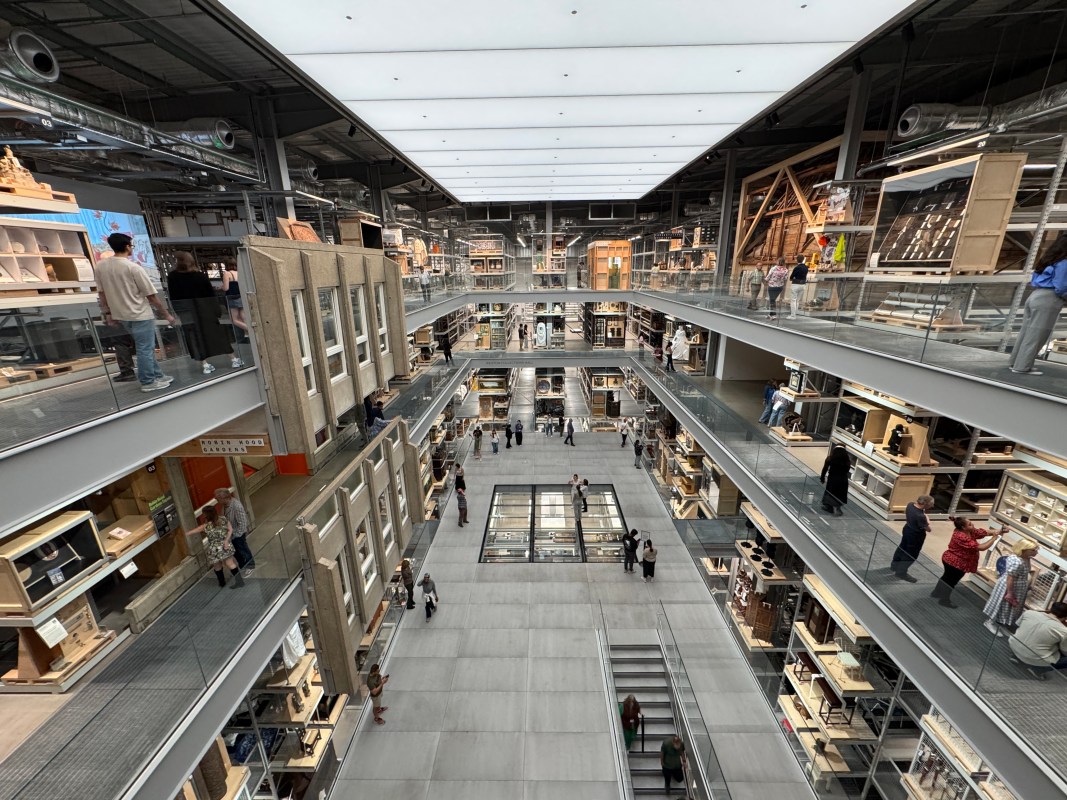
The V&A Museum in London has created a new format to present its vast collections to the public. This new archetype for museums is called the V&A East Storehouse. It was created to address the common problem that museums face, which is displaying only around 1-5% of their collections to the public.
NEW DIRECTION
In recent years, and especially after the pandemic, the role of museums is changing towards public living rooms and third spaces where the general public can have free access to spend time. Place making is about creating local and cultural hot spots and fostering a sense of community, belonging, and well-being. Museums can serve this purpose well.
Most museums face the challenge of how to attract younger audiences. Face-to-face encounters and engagement, like experiencing artefacts and objects in real life, are exactly what young people crave these days. So, to make a legacy museum relevant, some action is needed.
All in all, V&A Storehouse has outstandingly managed this and has received rave reviews. The most obvious new aspect of the Storehouse is that it is totally transparent, exposing the collection of 250,000 objects to public viewing. The building is literally a warehouse (like Amazon) where you can walk inside the corridors like in an IKEA store to see the objects placed on shelves.
A popular social media tool is to use behind-the-scenes action. In a similar way, The Storagehouse has opened its back offices, like a conservation work for everyone to observe. The goal has been to make visitors feel as close to the action as possible.
You feel close to the art, as if you actually owned it – which is how it should be with a national collection.
Visitor journey experience
Starting the journey by entering the warehouse.


Arriving at the central atrium is the heart of the building. It is conceived as an airy void sliced through the three main floors with spectacular views.


Plan your own route and view objects with simple navigation tools.


Go behind the scenes.


The best surprises on the journey are the large scale preserved spaces of particular cultural importance.


New service experiences
The Storagehouse also offers a brand new service of Order an Object, which enables visitors to summon items to a study room for closer inspection. It is an easy process to follow, and it seems very popular already.
At the Study Centre a member of the museum team will greet you and show you to one of the study rooms for your appointment. You are instructed how to handle the objects and given tools like magnifying glasses.


Examining rare objects is probably a first time for most people. It is exactly the type of immersive hands-on experience that people crave these days to escape screen time. Everything looks different in real life.
RADICAL CREATIVITY
According to the definition by Aalto University Radical Creativity is bold renewal that fundamentally changes how people, organisations, and societies operate.
Transparency and openness are key elements in changing the way people and organisations operate. The V&A Storagehouse is radical in the way it gives people direct access to view objects and how it opens conversations about the provenance of a museum’s acquisitions. Other ways museums can be more radical is to open up the curatorial process to communities to take part in it.


The V&A East Storehouse points to a new archetype for museums, which is more transparent, participatory, and radically creative. But what if museums went even further?
- What if they became co-creation spaces where communities shaped the collections and narratives?
- What if every visitor could influence what gets displayed, making curation a democratic process?
- What if transparency were the default, with provenance and conservation decisions open to public dialogue?
- And what if museums were designed as creative labs, where experimentation, surprise, and even failure were part of the visitor journey?
Reimagining cultural heritage in this way would keep collections alive, relevant, and continuously renewed.
 Trending Topics by Minna Takala