Linking Design Thinking & Doing
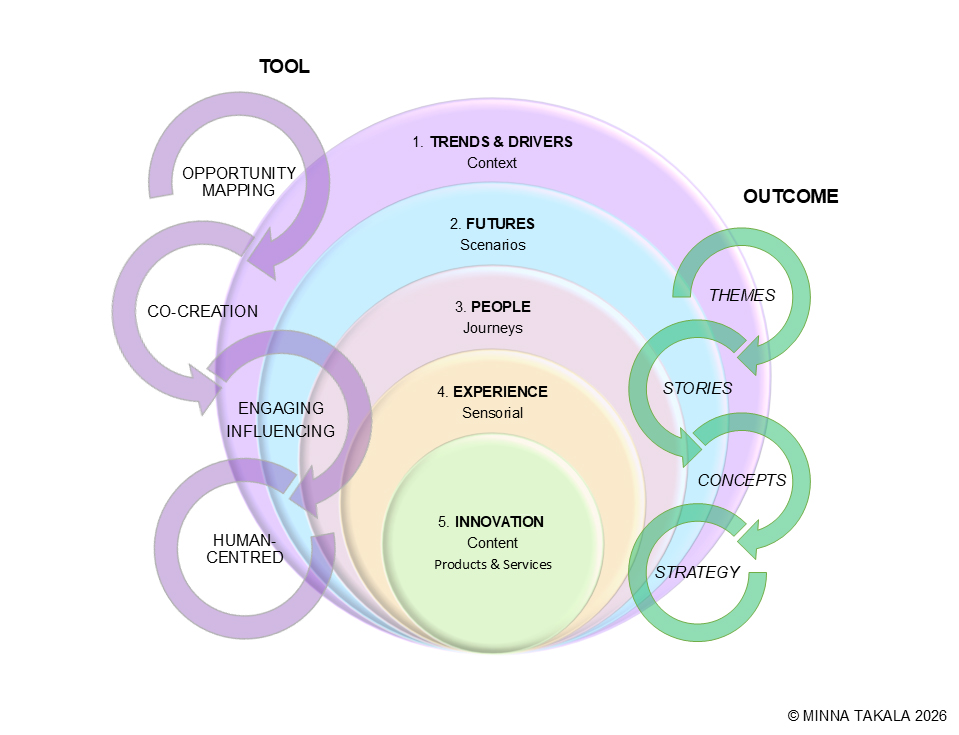
I am an experienced design and futures practitioner supporting private and public sector organisations to anticipate change, explore emerging opportunities and make confident long-term decisions. Starting from the big picture of Trends & Drivers I combine strategic foresight, customer insight and systems thinking to human-centred design. Turning insight and foresight into tangible concepts, scenarios and prototypes I help leaders and teams explore possibilities, challenge assumptions and make confident decisions.
FUTURE PREPAREDNESS
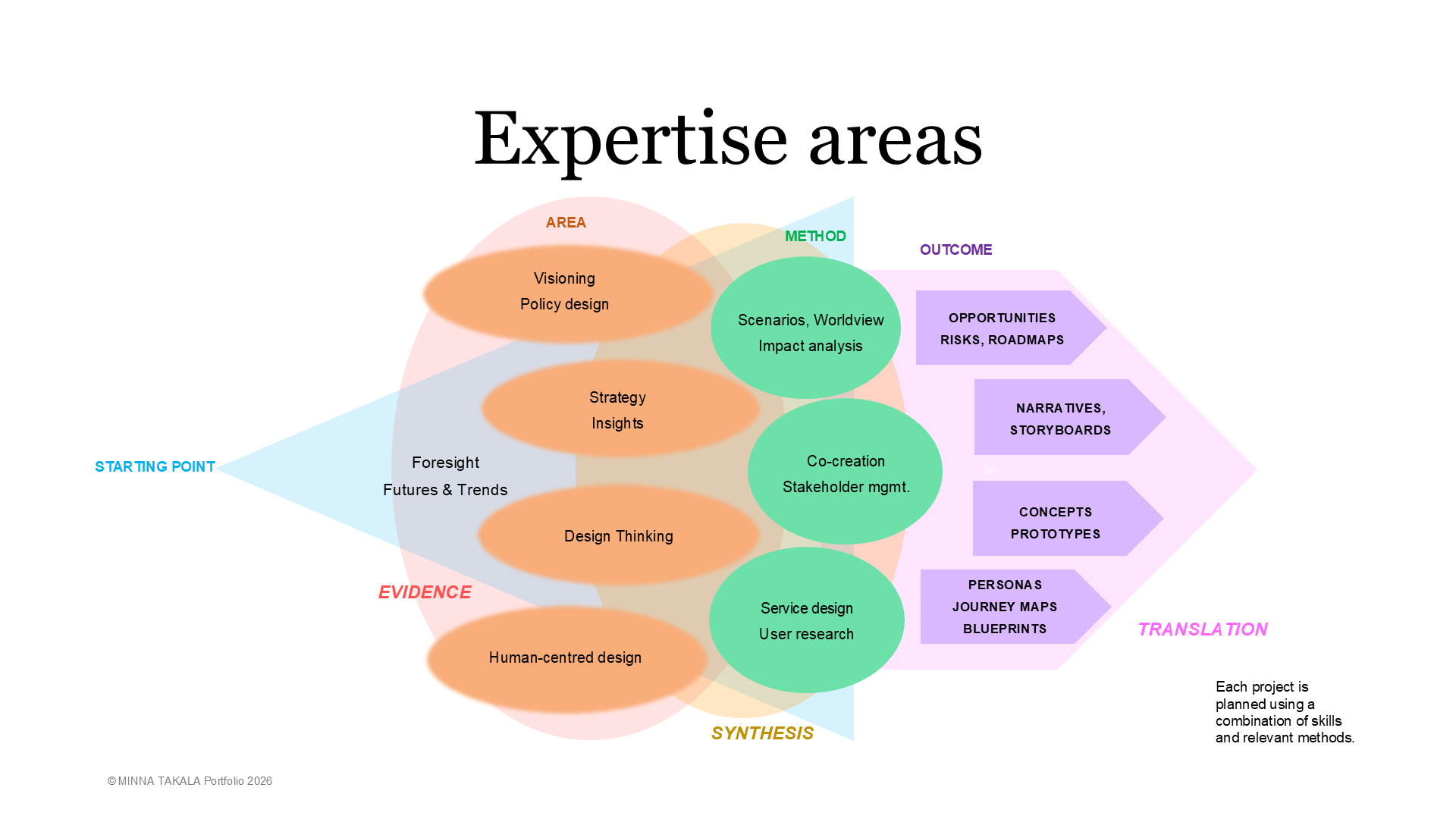
I have a strong grounding in foresight methodologies, including horizon scanning, scenario planning and futures mapping, and I enjoy applying them in practical, collaborative settings. My work balances strategic advisory with imaginative creative leadership. I synthesise weak signals, market shifts and socio-technological trends into engaging narratives, concepts and artefacts that help teams understand what may be emerging and why it matters. Through workshops, research and clear storytelling, I make abstract future possibilities tangible, relevant and useful for decision-making.
PROCESS
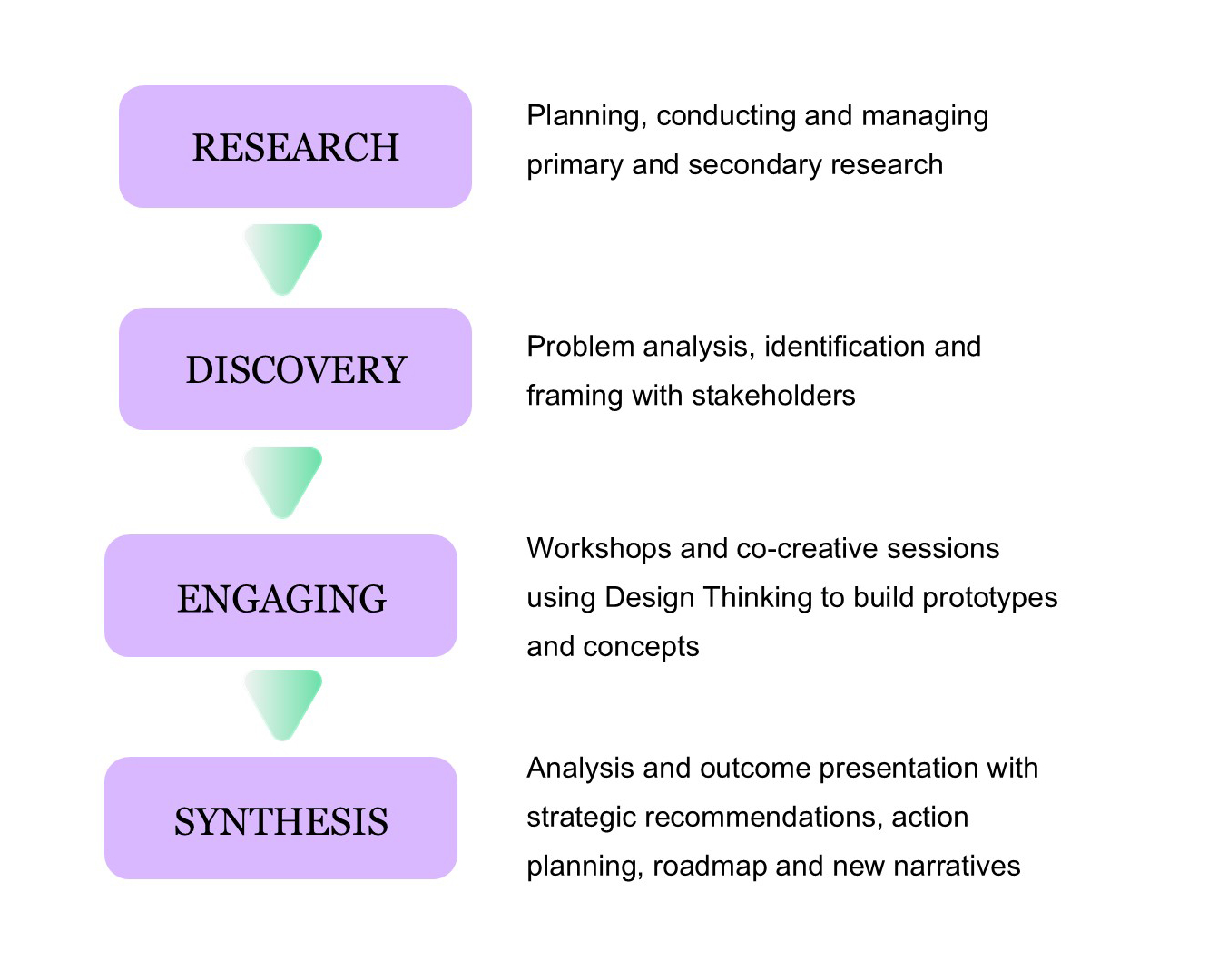
Typical project stages
HUMAN DRIVEN TOOLS
What particularly motivates me is the human side of futures work bringing empathy, judgement, reflection and imagination into conversations increasingly shaped by data and AI.
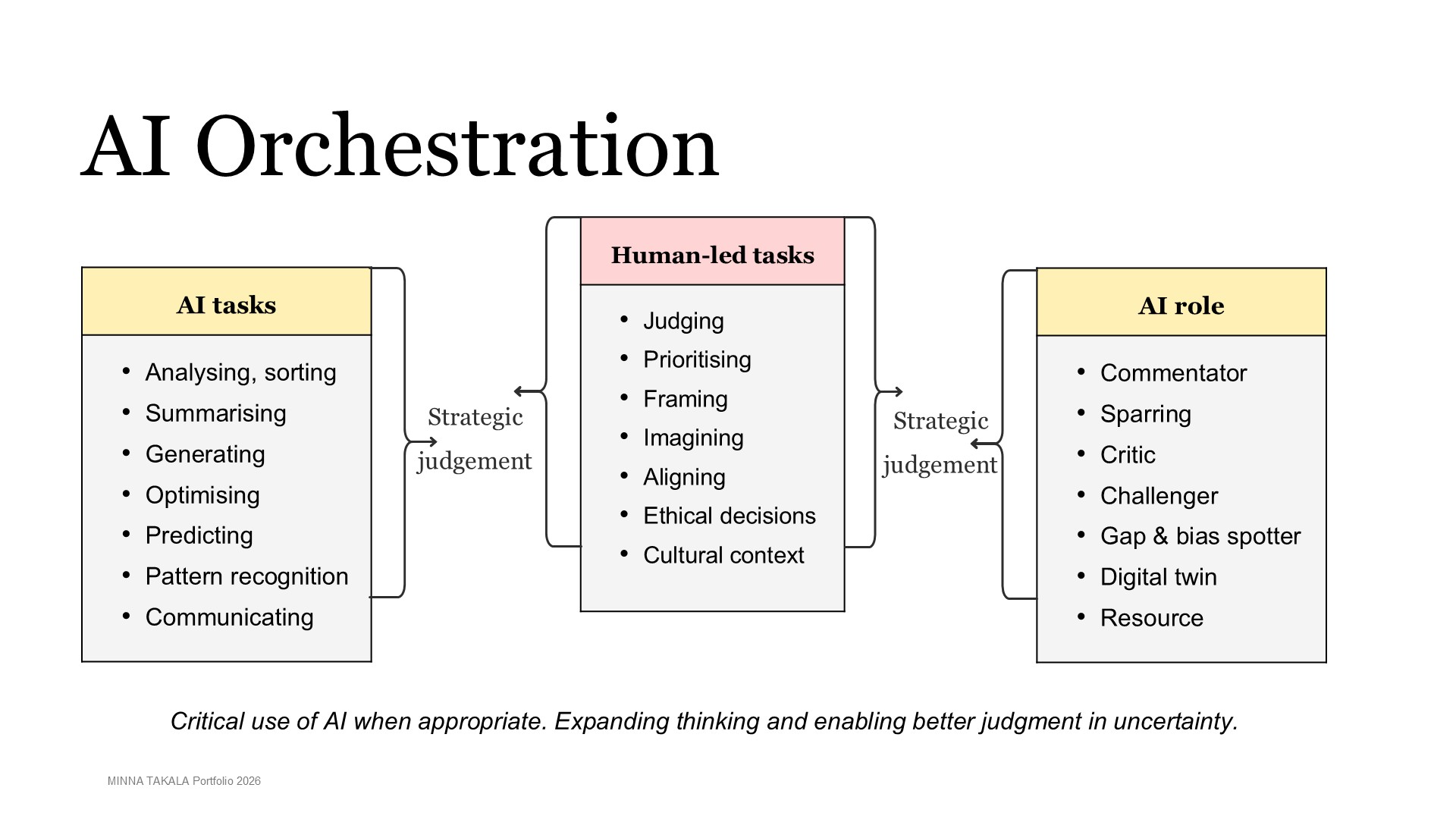
AI is increasingly embedded in research and strategic workflows, from scanning and synthesis through to analysis, recommendation and content generation. I work with AI critically and experimentally assessing the reliability of its outputs, checking for hallucinations, gaps and bias, while also exploring how it can be used beyond task automation.
The role of AI is expanding to a commentator, sparring partner and constructive critic challenging assumptions, identifying inconsistencies, exposing gaps in reasoning and suggesting alternative approaches. This creates opportunities to use AI not just to accelerate existing processes, but to expand exploration, challenge thinking and generate new perspectives.
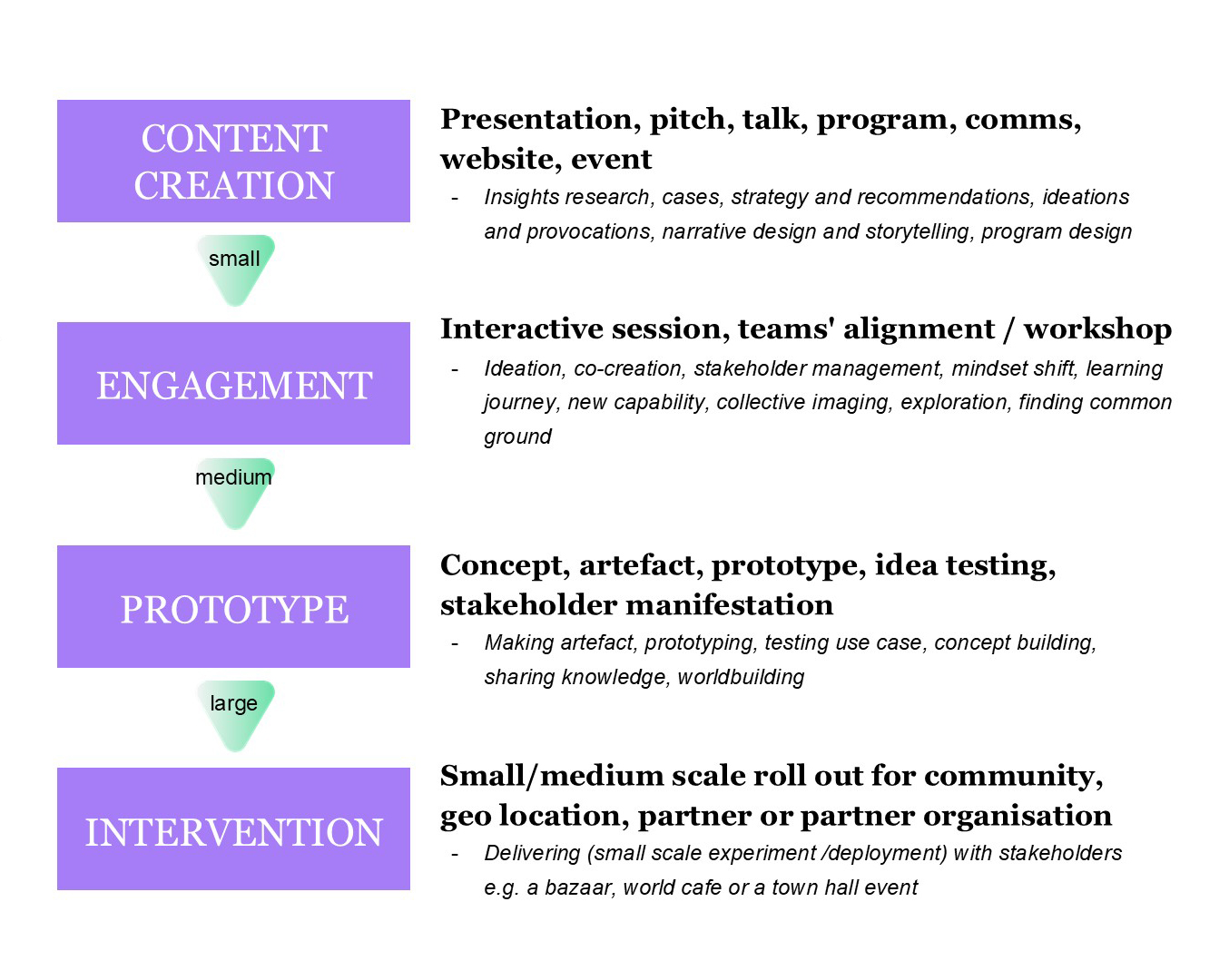
SCOPE & outcome examples
Small, medium and large work collaboration offerings
CASES
1. CHALLENGE: How to expand thinking when designing a Future State service concept?
METHOD: Foresight for service innovation opportunity scoping
Foresight approach was used in problem identification and opportunity scoping. Foresight tools can reveal many directions and alternative paths to futures thorough levels of impacts. The analysis shedded light on connections present in complex systems. AI tools were used for initial pattern recognition of trend reports. Below are the results from using two different methods of Three Horizons and Futures Wheel.
Three Horizons method
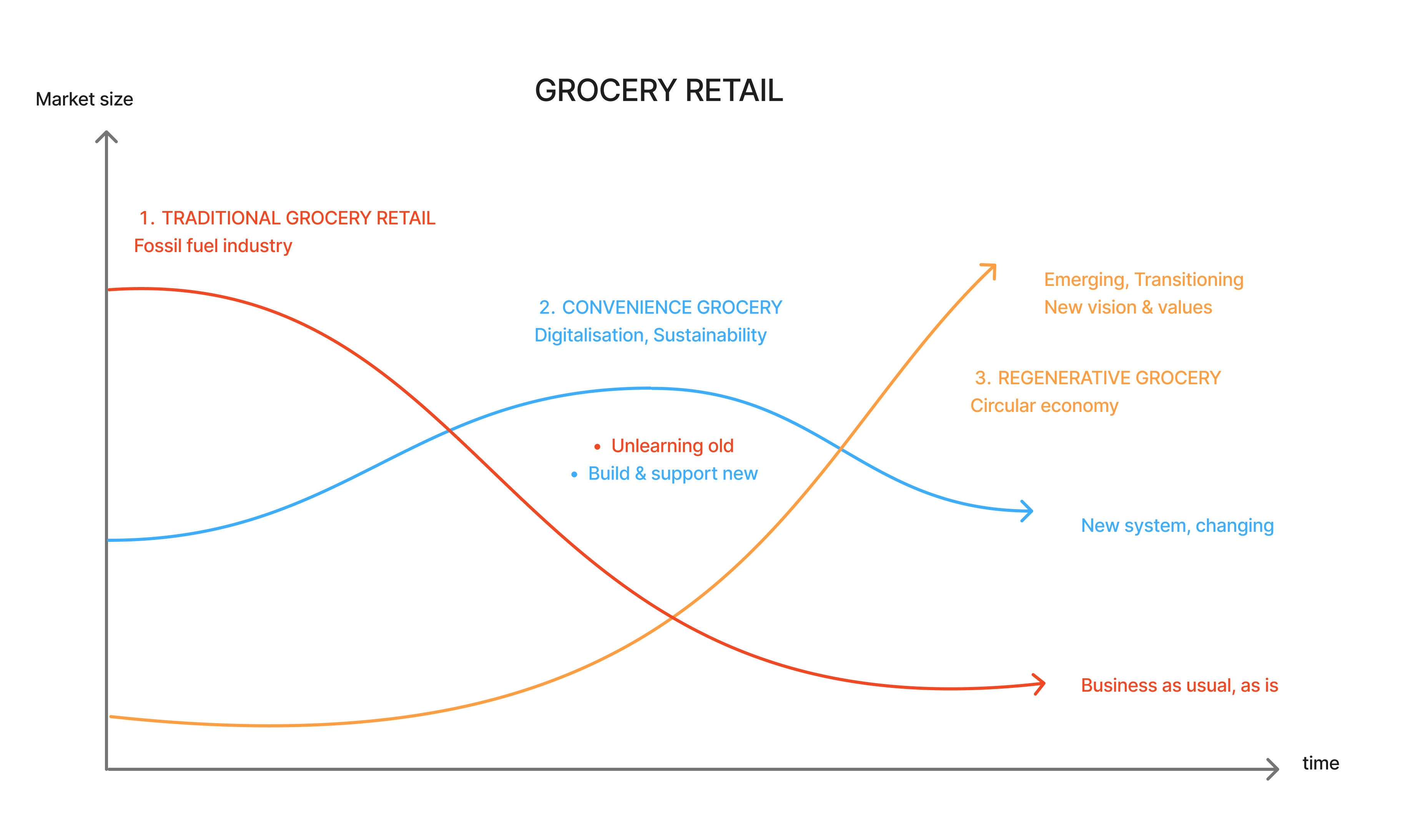
- TRADITIONAL GROCERY RETAIL (H1)
- CONVENIENCE GROCERY (H2)
- REGENERATIVE GROCERY (H3)
In exploring Horizon 2, the main goal is to work out and bring together, the needs to address the issues identified in H1 and to nurture the emerging changes in H3 to promote their establishment.
Futures Wheel method
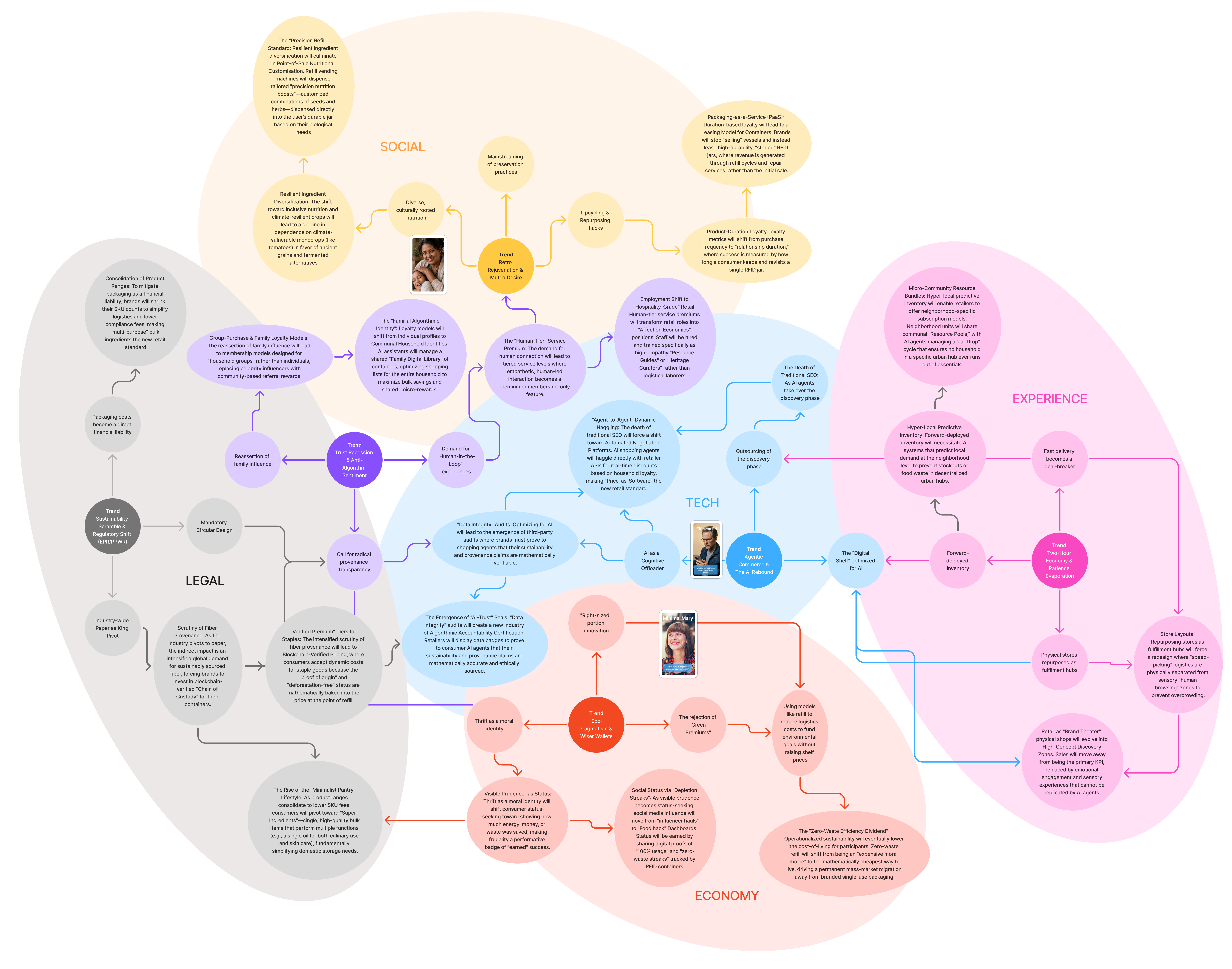
A Futures Wheel uses Cascade Thinking, allowing you to go out three levels of impact to gain insight (and discover unintended consequences).
OUTCOME:
- List of our current assumptions
- A set of likely transition processes
- Understanding which strategies and innovations are the most promising in terms of impact
- Key uncertainties: What do we need to find out more about to understand these impacts?
- Adapting: What can we do in the short term to address these impacts?
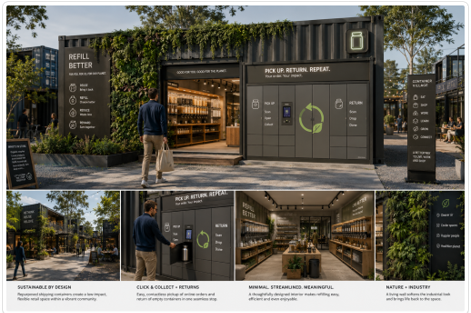
2. CHALLENGE: Design a scalable, commercially viable, low-waste grocery service
A connected service ecosystem, including:
– Physical retail (modular stores in shipping containers)
– IoT-enabled digital experience dispensary
– Mobile and digital interfaces for consumers
– Data and feedback systems
METHOD: End-to-end service design
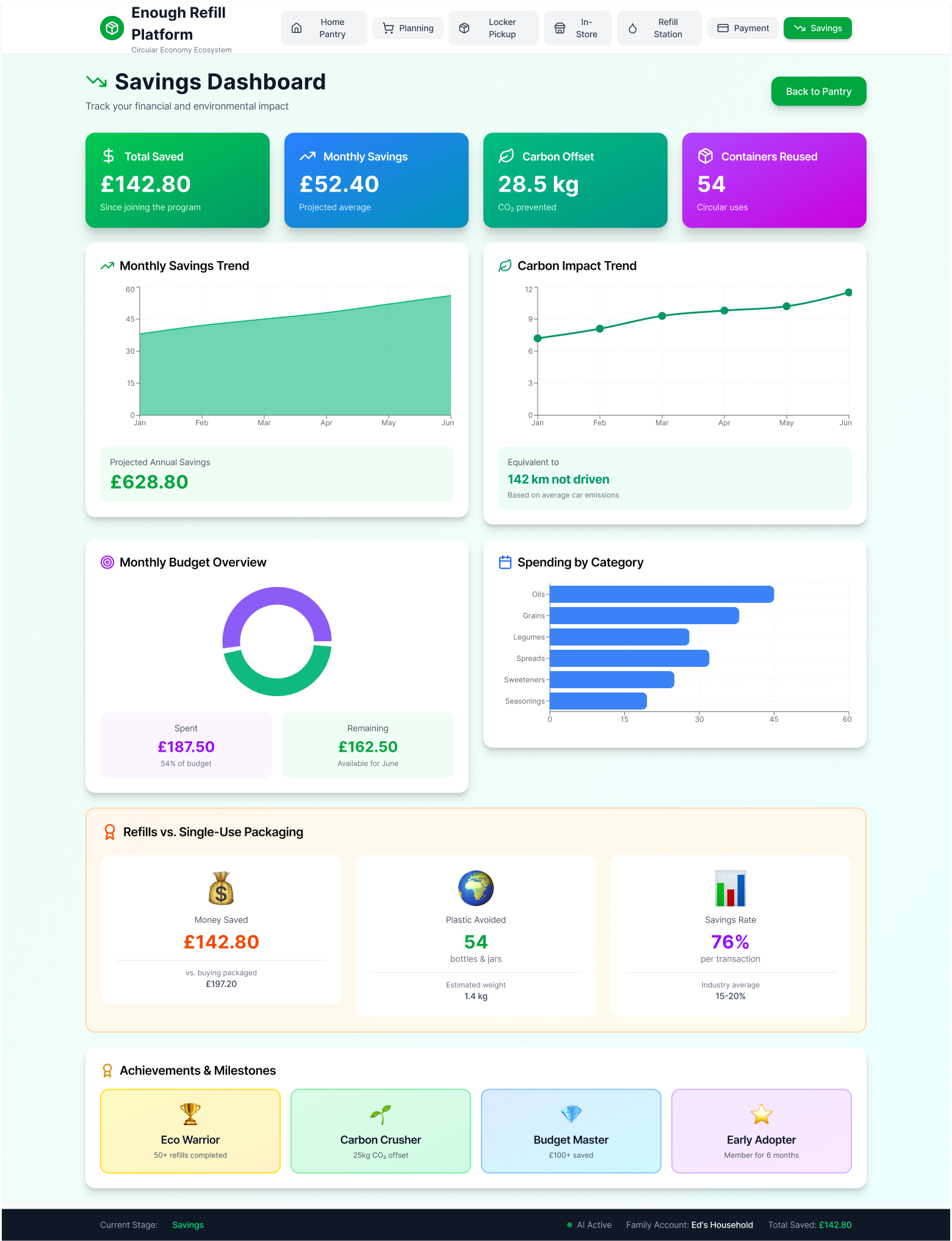
Starting from problem identification and stakeholder interviews the process moved to research (survey and field research) from which personas, prototypes, concepts, customer journeys, storyboard and blueprint were created.
OUTCOME: A seamless “walk in, walk out” experience. Integrating physical stores, mobile services, RFID packaging and data systems.
3. CHALLENGE: How to prepare and anticipate future citizen needs? How to strategize for many futures?
METHOD: Sense making based on city scenarios
Scenarios are an effective way to tackle complexity and big issues. They help to move thinking from current reality to transformative future. Co-creation workshops practised anticipation in how the future could happen. Teams explored future worlds using service scenarios. What kind of opportunities and threats different scenarios produce?
PROCESS: In workshops participants analysed scenarios together generating What if -situations and imagining environments where they would take place. The process directed participants to uncover future OPPORTUNITIES and specific CHALLENGES. It lead to prioritising and aligning strategy for the organisation.
OUTCOME: New co-created service strategy for the city. Participants learned to see the world through a different lens. Organisation became better prepared for complex innovation challenges.
Example Scenario Map – City as a Commons, City of Helsinki

Copyright © Minna Takala 2026
Contact for more information


 Trending Topics by Minna Takala