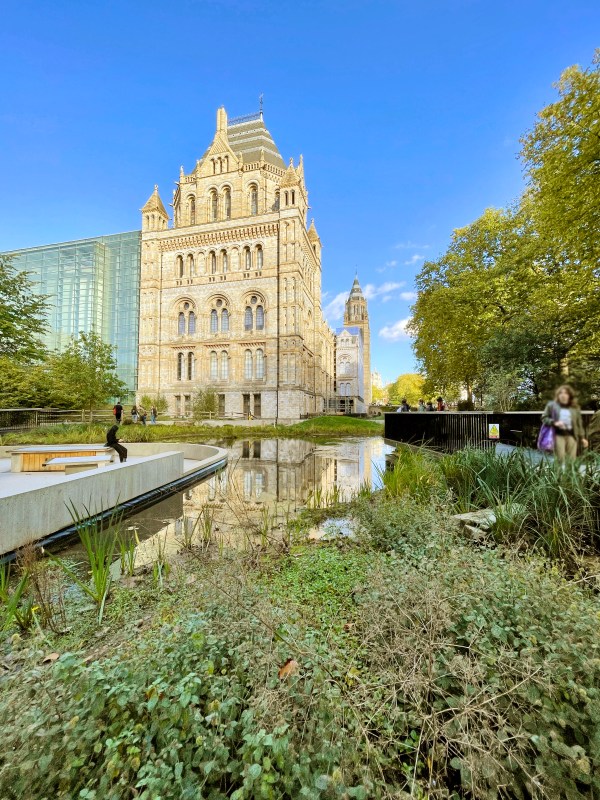
London’s Natural History Museum has undergone a major revamp project, including the land around it, which has been transformed into an educational outdoor space. The sensorial and interactive elements carefully planned into the experience set the Nature Discover Garden apart from a regular walking path.
A NEW PUBLIC SPACE
Entering this new free public space feels inclusive and easy. Even on the busiest day on the weekend, you can just walk in straight from the street without the hassles of queueing or booking in advance. What a relief in a megacity!
Journey experience
Walking the path is a carefully constructed journey through different environments across grassland, wetland and woodland habitats.


You can choose your level of interest from just reading the signposts to following different types of instructed journeys with guide materials.


Interactive and sensorial
The best part of the new garden experience is the extra effort that has been made to make the invisible nature like microorganisms more visible and tangible for visitors. Using not only visuals but soundscapes recording the garden sounds day and night. You can listen to for example an inner life to a tree.


The bigger objective for the garden is to study and increase local biodiversity in action.
‘The data we record will form an essential tool in unlocking new solutions to the decline in insect populations and further science-informed nature recovery in the UK. Focusing on acoustic data is a key way to monitor biodiversity and make our cities and towns better for nature.’ Acoustic Biology Researcher at the Museum, Ed Baker
A Living Laboratory
The purpose of the garden is also to act as a scientific lab for the museum. They are monitoring soil and pond communities, and ground and aerial invertables. If you look carefully, you can spot some collection points.


Monitoring is done via audio, ultrasound, nocturnal migration audio, soil eDNA and malaise eDNA tools.
Evolution garden
The journey from Nature garden continues to a new Evolution Garden, which is an ambitious attempt to re-create geological timeline of ancient rocks from the oldest rocks in the UK to the present day.

IMPACT TO LOCAL AREA
The objective for public spaces like the Nature Discovery Garden is to increase biodiversity and wellbeing for both non-humans and humans.
The museum has listed three outcomes that support their vision of future where both people and planet thrive:
-
-
- People act on behalf of nature (advocate nature)
- People understand their role and impact on it
- People feel connected to nature
-
 Trending Topics by Minna Takala