This year’s London Design Festival marked a significant shift in focus, moving away from the large-scale furniture exhibitions of the past. Instead, the spotlight was on smaller-scale productions, with a strong emphasis on craftsmanship and materials. The most notable showcase was Materials Matter, a trade show centred on sustainable materials development. Below are key trends and observations from this year’s London Design Festival.
SUSTAINABILITY TAKES THE LEAD
Material Matter Fair has solidified its position as an essential hub for creative innovation, uniting designers, makers, and manufacturers under the theme of sustainability. Its focus on environmentally responsible materials distinguishes it from more general trade shows, offering a more targeted and meaningful experience.
Innovating with Sustainable Materials
- The creative use of traditional materials in new ways was a standout trend. A notable example is Rootfull, a textile created by guiding plant roots to “weave” products, pushing the boundaries of what we consider possible in sustainable design. This technology goes beyond traditional 3D printing by literally programming nature to create.
- In addition, more unconventional materials were featured showcasing how they can contribute to sustainable consumer goods. Waste material sources like human hair or car windshields were introduced to construct accessories for example yoga mats by Filie.
- Materials can have the ability to shape society. An example from Columbia University Natural Materials Lab presented The Muddy Stools which converge digital fabrication with waste materials, melding earth soils, plant fibres, and animal manure.
Offering confrontational perspectives on historical material mix designs, these elements counter negative interpretations linked to colonialism and industrial power shifts.


Comfort and Confident Colour
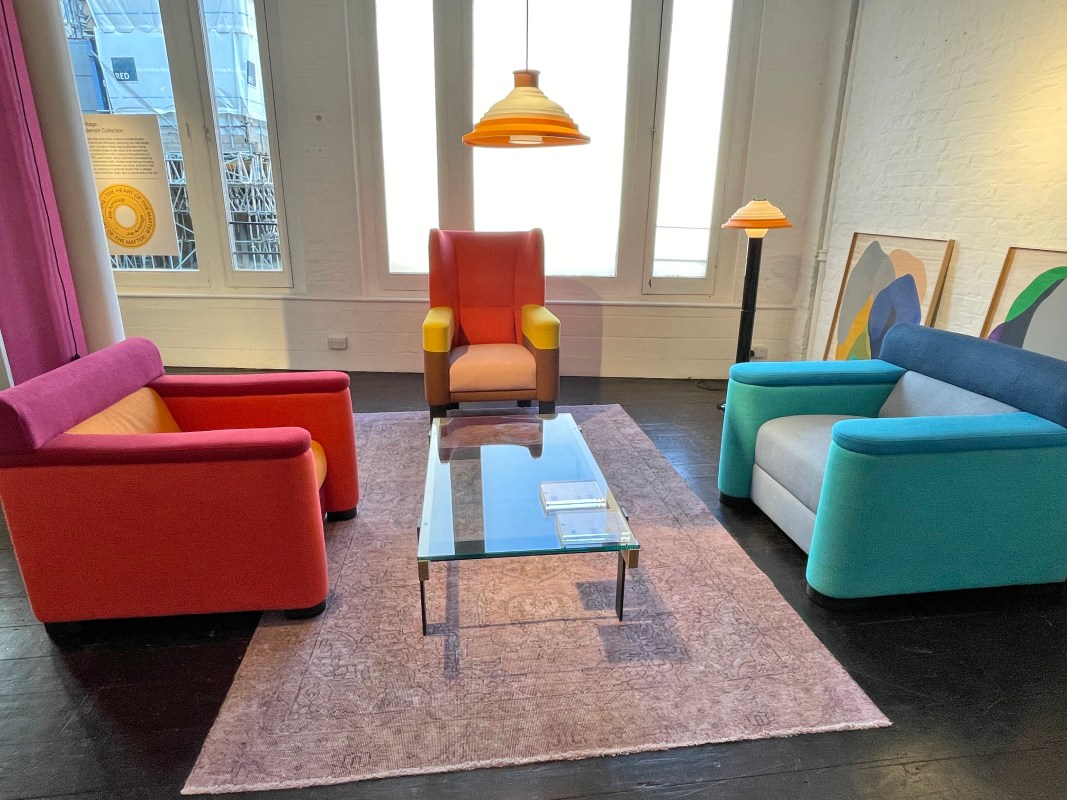
Showrooms are always a big part of the Design Festival. This year the most noticeable trend was confident colour palettes.
- Leading furniture stores and showrooms like SCP and Vitra introduced colourful collections that were suitable for both home and working spaces. There is not much difference anymore between design language for home, hospitality, work and public spaces. Casual comfort can cover them all.
- Rather than focusing on traditional categories, the most prominent designs prioritised sustainability and adaptability—values that resonate across the design landscape.


Embracing Experimental and Uniqueness
There is always a market for more experimental design pieces and objects for people, who wish to invest in spaces to make them more personal statements. These designs are often closer to art, and their purpose is less about practicality and more about individuality and breaking stereotypes. Mint Gallery showcased such works, appealing to those who value individuality.


CONCLUSION
As the London Design Festival continues to evolve, its future direction remains uncertain, shaped by economic challenges such as supply chain disruptions and an ongoing global downturn. However, what is clear is that sustainability, adaptability, and a push for unique expressions in design can continue to drive the industry forward.
 Trending Topics by Minna Takala