New narratives can change behaviours to activate innovation that creates positive impacts. Narrative design can challenge the existing narrative.
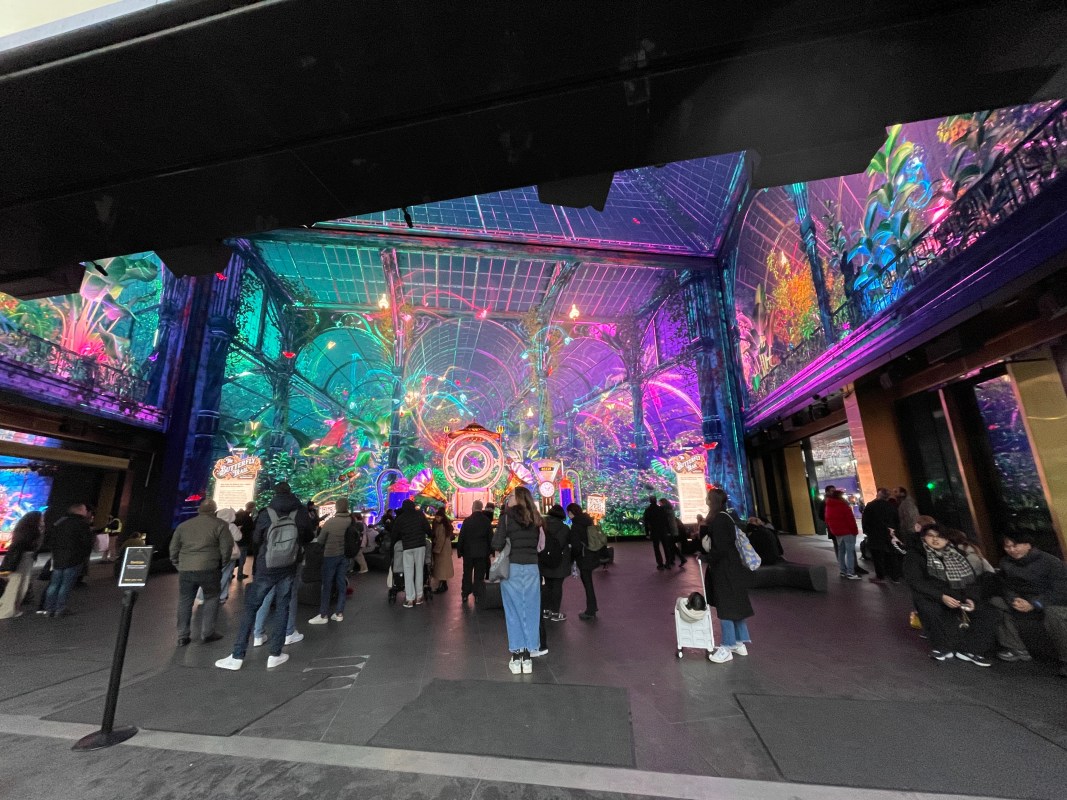
Image: Outernet is London’s most visited attraction. Entertainment, music, digital art and branded experiences are broadcast onto wrap-around LED screens with interactive capabilities. In immersive storytelling ‘medium is the message’.
There is a growing need for new narratives for example to communicate the urgency of the climate crisis. Narrative design can challenge the existing narrative of exploiting nature and move actions from an extractive economy towards regeneration.
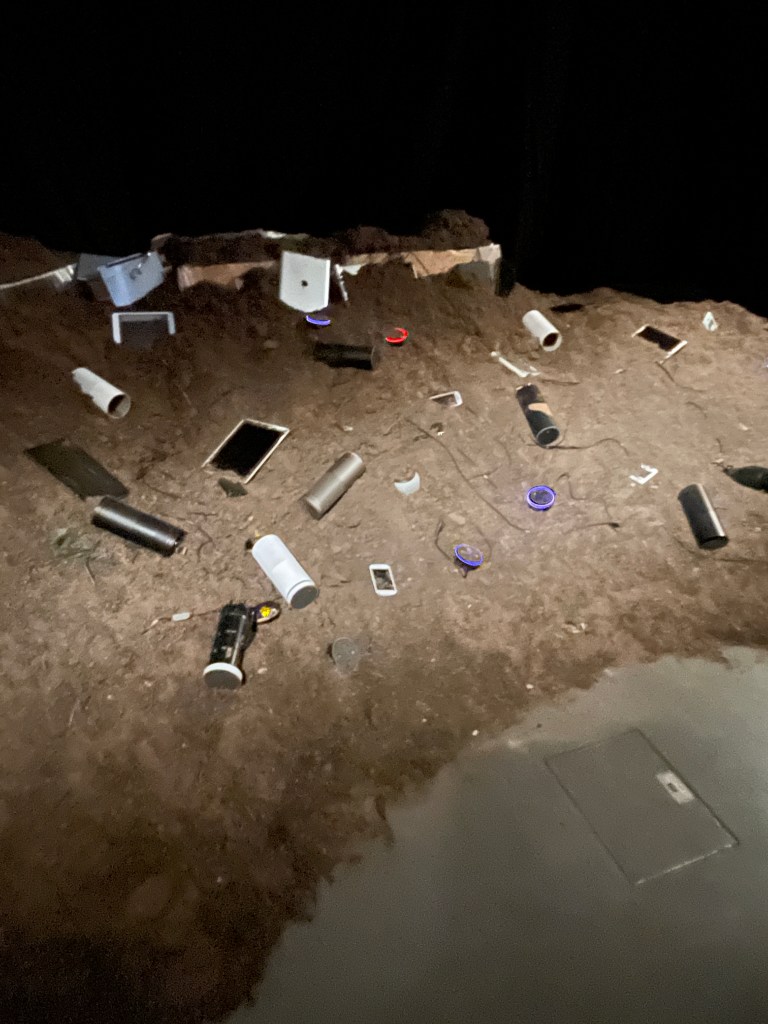
Image: Science Gallery London exhibition AI: Who’s Looking After Me?
In this cautionary tale from an undefined near-future, dozens of discarded and abandoned smart speakers lie in an e-waste dump, telling stories about how and why they were thrown away. These stories describe possible futures where technological, social and cultural events change our relationship to AI and ‘smart’ technologies – some are futures we might want, and some we should try to avoid.
Newly Forgotten Technologies by Wesley Goatley invites you to explore the overlooked or unseen aspects of ‘smart’ devices, such as their environmental impacts, the hidden human labour behind their development and maintenance, and the privacy exploits built into their design.
https://london.sciencegallery.com/ai-artworks/newly-forgotten-technologies
System change
Since systems can only change from the inside narrative design can give more power to the social collective to change the system.
Narrative design language can expose myths about e.g. productivity and commodification by expanding visions to a shared and interconnected future.
Culture as catalyst
Narrative systems accelerate deeper change. Empowering stories can create positive mental models by encouraging new desired behaviours.
A familiar example of behaviour change caused by narrative design is the global commodification of bottled water. It was achieved using a narrative that bottled water is safer than tap water. The narrative has resulted in a huge increase in bottled water consumption and plastic waste mountain globally.
A new narrative for example “Water is Life” would focus on nature’s life-enforcing power. It would make people realise the fact that water is a scarce resource. The narrative would change consumer behaviour from buying bottled water to using tap water instead.
The example was provided at an Inter-Narratives event curated by Bridgit Antoinette Evans, on narrative systems design and cultural change processes.
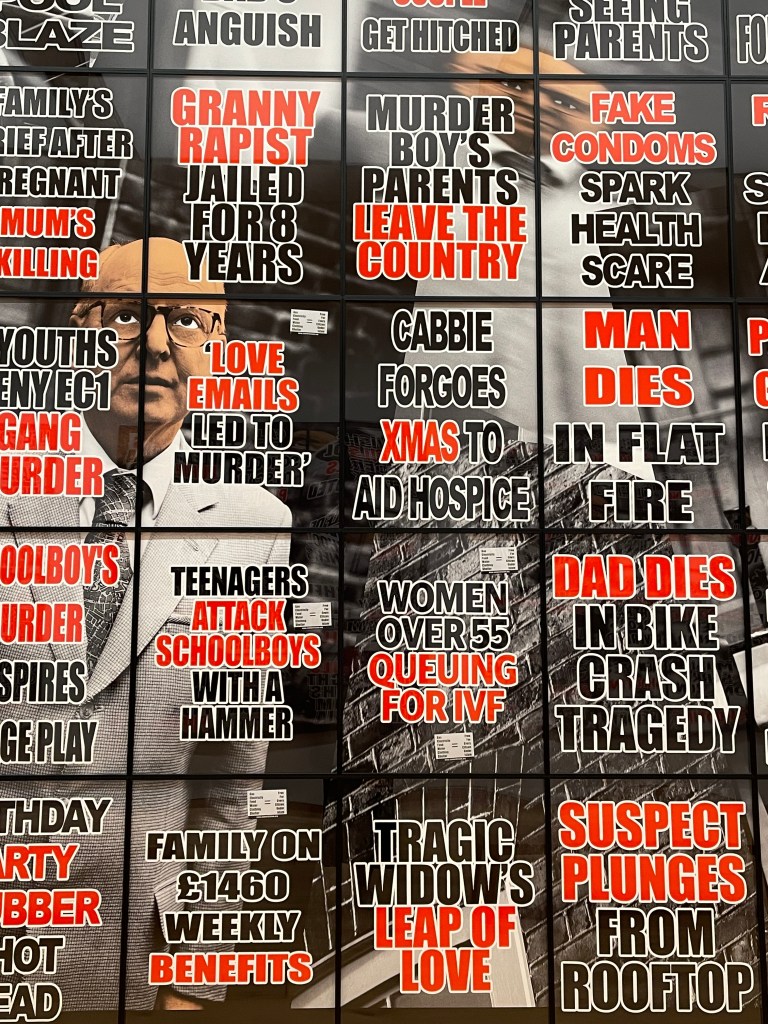
Another familial example is the cultural media landscape and use of language of tabloid media.
Tabloid media scaremongering and fantasising headlines art by Gilbert and George the ‘LONDON PICTURES’ offers both a directory of urban human behaviour and a moral portrait of our times.
Brutal and declamatory, these brooding and disquieting pictures have been created from the sorting and classification by subject of 3,712 newspaper posters, stolen by Gilbert & George over a number of years.
In their lucidity, no less than their insight into the daily realities of metropolitan life, the ‘LONDON PICTURES, are Dickensian in scope and ultra-modern in sensibility.
Online influencing and manipulation
When you add AI to the mix it gets even more complicated. There is a triad of influencer, algorithm and crowd in the media ecosystem. According to online manipulation expert Renée DiResta, you see the influencers producing content for their audience, but also for the algorithm. It is an increasingly participatory process. Activism and propaganda can use the system in the same way for own advantage. The differentiator is the intent.
In order to get the message through the noise, it needs to be part of the movement towards collective change. Populist parties have used online influencing very successfully by mobilising collective action inspired by a vision of change. They have created movement that brings people together through a strong sense of shared mission, values and practices. Not delivering on election promises in less important compared to feeling of being heard.
Strategic use of language as a meaning-maker
Language matters. Changing the language to create a new meaning is a powerful tool.
A recent example of how changing the language in a high-performance sports can dramatically improve results comes from football. Apparently, changing the word from a ‘substitute player’ to ‘finisher’ gave England’s national football team a real boost during Euro 2024 games.
How to measure the impact of storytelling
There is enough evidence that storytelling can create change. But how exactly to measure it is a challenge. Simple numerical only KPI’s like site visits, likes etc. don’t cover the full extent of the power of stories. However, there are alternative ways to evaluate the impact described in Impact Storytelling: the Ecosystem, the Evidence and Possible Futures by UAL AKO Storytelling Institute’s latest report.
One way to present the evidence of impact storytelling is to organise and group the evidence into four types:
- Thought leadership
- Theoretical frameworks e.g. social sciences, anthropology and media studies
- Mechanics of practical ‘how to’ tools and processes for storytelling and narrative interventions e.g. campaigns
- Impact studies e.g. measuring the state of individuals’ attitudes, norms and behaviours before and after the intervention.
CONCLUSION
Using evidence like impact studies for evaluation rather than purely numeric measurements gives a more comprehensive picture of how narrative design can change behaviours. This can build stronger arguments for system change and give more power to the social collective.
 Trending Topics by Minna Takala