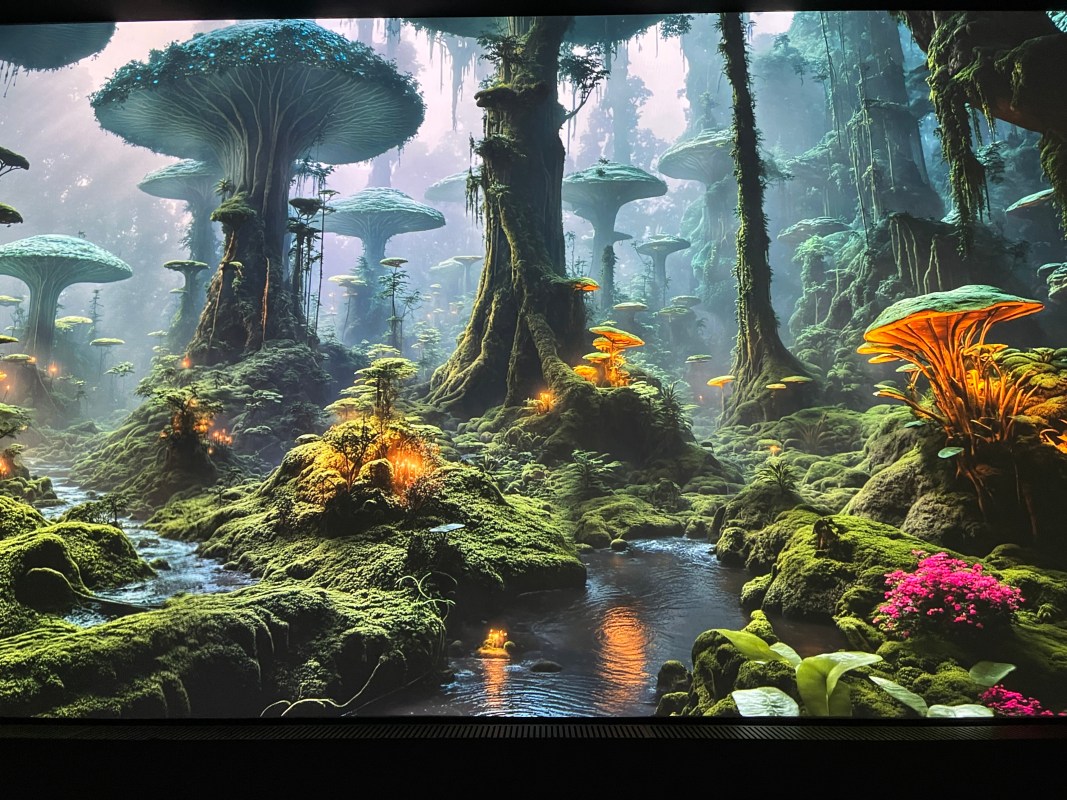
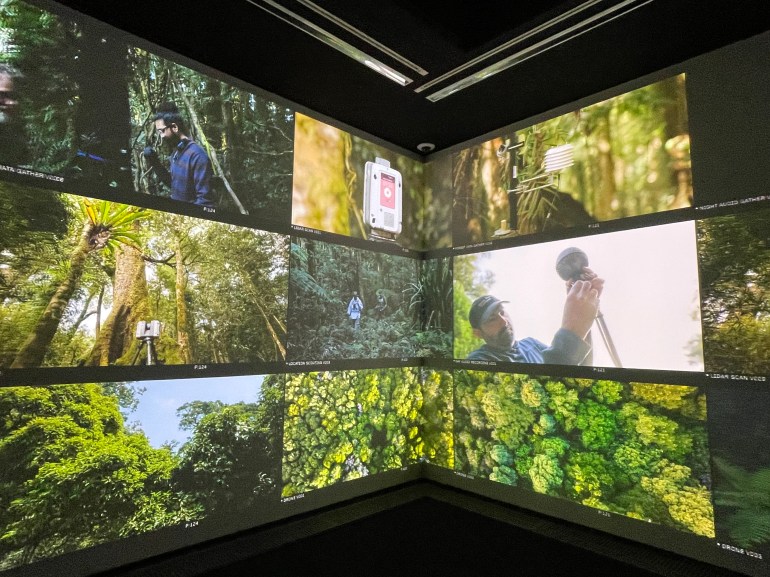
Refik Anadol’s immersive installations at the Serpentine Gallery have been by far the most inspiring digital artworks this year. His AI-generated images are inspired by data of flora, fungi and fauna gathered from over 16 rainforest locations.
Refik Anadol’s work is created employing The Large Nature Model, the world’s first open-source generative AI model dedicated to nature. What the exhibition manages to do so well is the awe and wonder experience when we encounter the mind-blowing creation power of nature. This ever-evolving continuity of creations is captured in moving images inside gallery walls and ceilings.
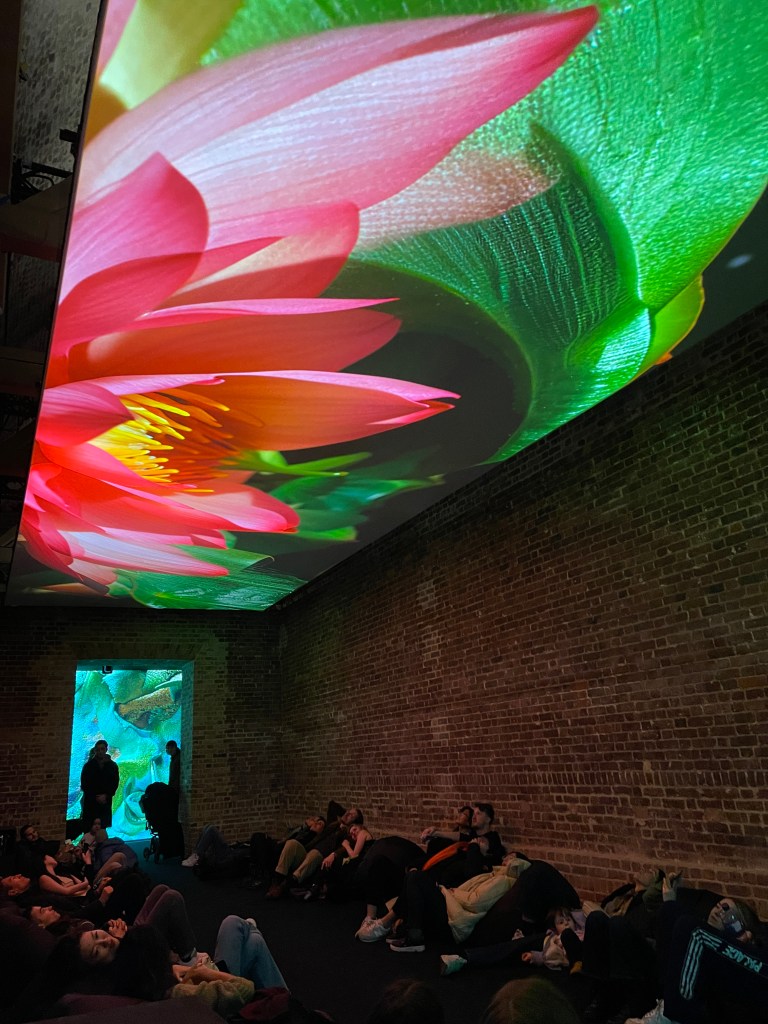
It is worth mentioning that all media of the exhibition is developed together with Google Cloud to use sustainable energy sources. For the sake of transparency, the source of data and the name of the algorithms are shared.
Living Artworks
Refik Anadol’s work focuses on a large nature model instead of a large language model. Since 2010 he has been exploring the movements found in nature and creating simulations based on data. From 2017 he and his team have gathered more than 4 billion images of flora and fauna.
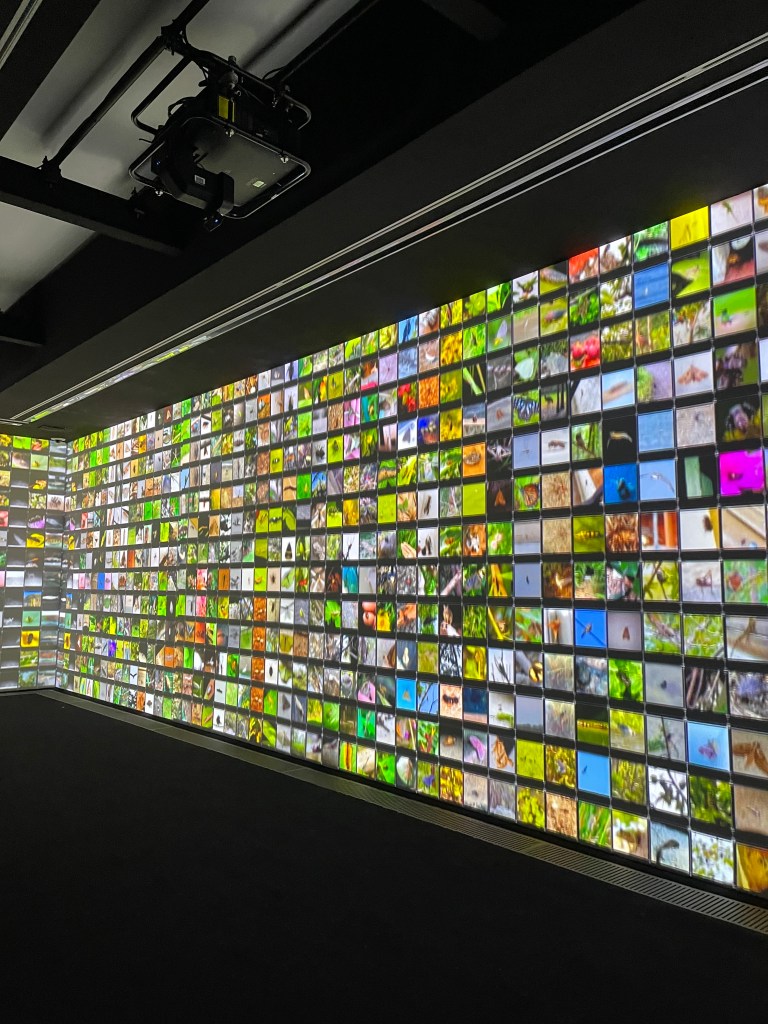
Thinking about data as a pigment opens up a realm where the physical limitations are rendered irrelevant. Data is completely free in its movement, shape, colour, and pattern. What happens when this living artwork develops a response?
Artificial Realities: Coral and Rainforest
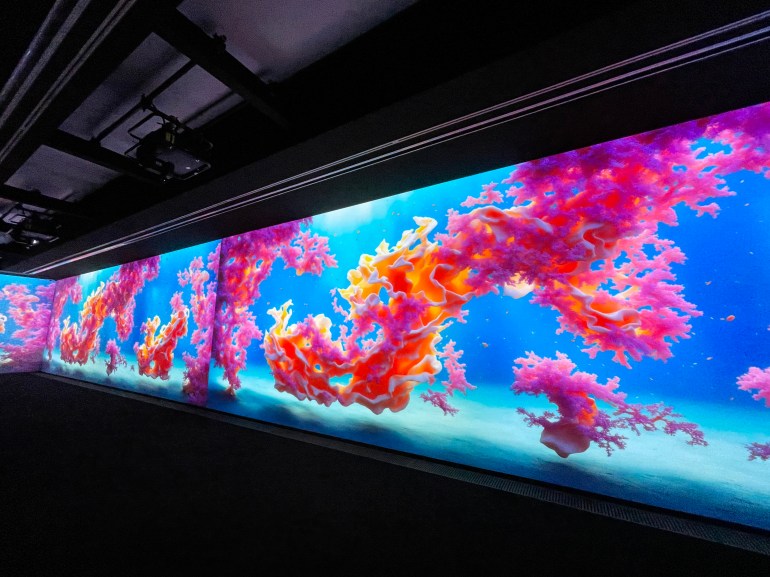
These artworks were created to increase awareness of the disappearance of ecosystems. Corals are dying due to climate change. Can we use AI to represent them? One of the most fascinating aspects of AI art is to provide new ways of seeing the world. Furthermore, AI images have the capability to make imagined ideas more tangible.
Art galleries and museums as immersive experiences
There is a growing trend to employ technology to make art galleries and museums more immersive experiences. In the future multimodal AI could create sound, image, text and scent to connect the non-visual layers of artworks.
Refik Anadol’s AI generated art is also honouring ancestral wisdom. He worked with the Yawanawa people in the Amazon and learned about their spiritual connection to nature and heightened sensorial awareness. These ancestral voices should also be included in current and new technologies.
“I believe that with AI I have a much higher chance of creating a universal language of humanity”.
Tech for Good
How might the future unfold using something like a Large Nature Model? How can we use this type of new technology for good causes and avoid further exploitation of nature?
- Adding a sensorial level to the art. Making the viewer feel sensorial impacts e.g. when nature is being exploited and suffering.
- Making viewers engage with nature by deeper connection and respect demonstrating how nature is alive, always evolving and providing for humans.
- Open a new world of possibilities for regeneration and betterment e.g. seeing simulations suggested by different voices e.g. ancestral wisdom or non-humans.
- Taking innovation to the next level from human and corporate exploitation to respectful interconnectedness improving life for all.
Using nature as a ‘database’ can open possibilities for both good and bad. So, those who are participating in writing and creating AI models should have a moral compass.
References are from curator Hans Ulrich Obrist’s interview with the artist. (Serpentine app at Bloomberg Connects, 2024)
 Trending Topics by Minna Takala